

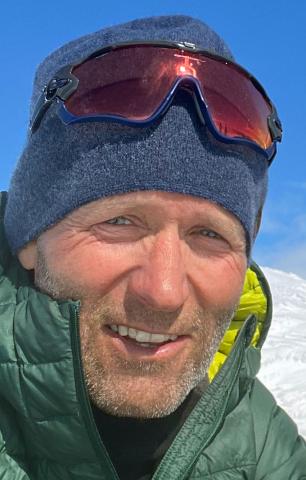
Om kandidaten:
Per-Øyvind Torvik er ansatt som leder for idrettsutdanningen i Meråker ved kroppsøving, idrett og friluftsliv ved Nord universitet. Han ble ansatt som universitetslektor ved Nord universitet i 2016, men har tidligere jobbet to år ved Bodø Lærerhøgskole og jobbet med Høgskolen i Nord-Trøndelags studier i Meråker fra 1996 til 2016. Han har mastergrad i idrettsvitenskap fra NTNU.
Torvik har tidligere arbeidet seks år i forsvaret, han har også jobbet som trener for det norske og slovenske landslaget i langrenn.
Avhandlingens tittel:
Training and pole length manipulation for optimizing physiological capacities and technique to improve performance in Long-distance and Olympic-distance cross-country skiing
Tittel på prøveforelesning over selvvalgt tema:
Sex differences in the physiology and performance of cross-country skiers; practical implications for training.
Tittel på prøveforelesning over oppgitt tema:
Use of technology to optimize athlete’s performance
Tidspunkt for prøveforelesninger: 29. juni 2022 kl. 10.00
Tidspunkt for disputas: 29. juni 2022 kl. 12.30
Sted: Nord universitet, Levanger: Oransjesalen.
Prøveforelesninger og disputas vil bli strømmet.
Bedømmelseskomité:
- Førsteopponent: Professor Vesa Linnamo, University of Jyväskylä, Finland
- Andreopponent: Associate Professor Barbara Pellegrini, University of Verona, Italia
- Komitéleder: Dr. Arnt Erik Tjønna, NTNU
Sammendrag av avhandlingen:
In order to answer the overall objective, two specific aims were conducted:
1) To compare physiological capacities, and kinematical patterns in double poling between Olympic distance and long-distance XC skiers, and analyze the training characteristics of long-distance XC skiers (Studies I and II)
2) To describe choice of pole lengths among competitive XC skiers and evaluate the effects of pole length manipulation on performance in the classical and skating style of XC skiing (Studies III-VI).
The thesis contains six studies. Study I and II are comparing the physiological and kinematical responses in DP between Olympic distance and long-distance cross-country skiers while treadmill roller skiing, while study II investigated the training characteristics of world-class male long-distance cross-country skiers by using training diary data generated through questionnaires, and follow-up interviews.
Studies III-V examined the effects of increased pole length in DP, G3 skating and on-snow skating on performance, physiological and perceptual responses, as well as sub-technique selection. Study VI described the use of pole and ski length in competitive XC skiers and examined the influence of sex and performance level.